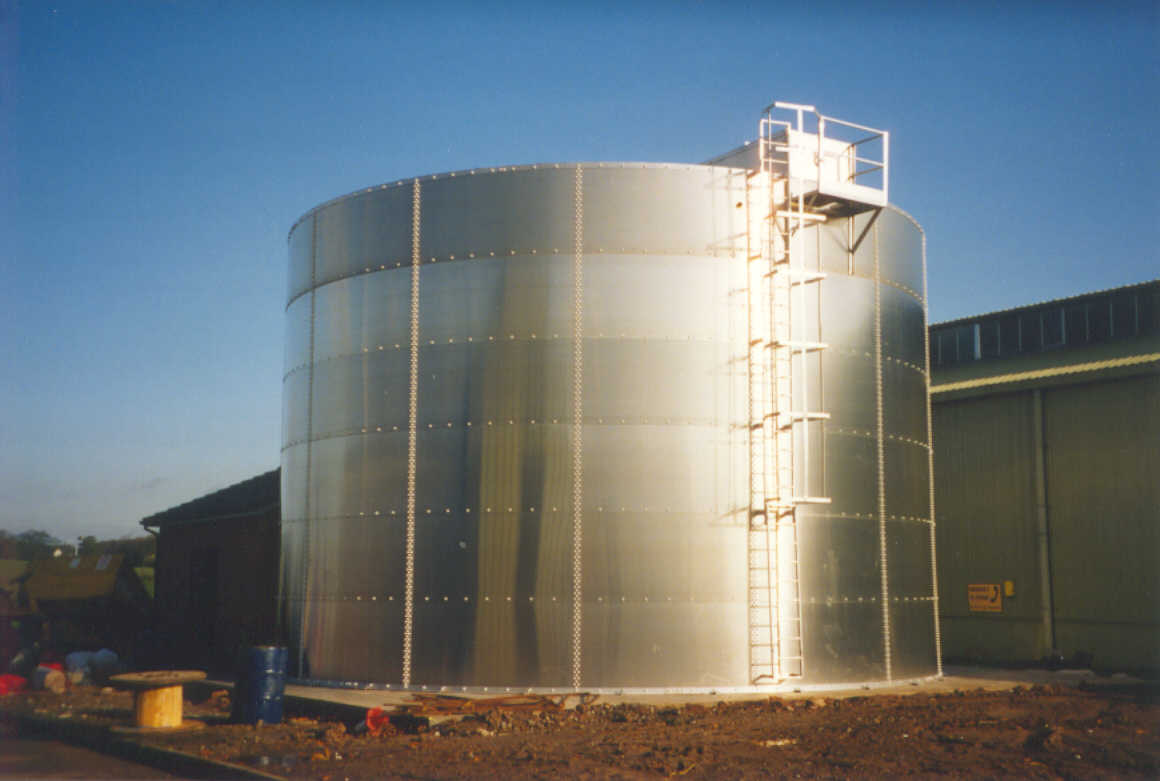




Stop the supply of water and you stop the line. In food, drink, brewing and chemical plants, water is not a background utility; it is a raw input that cooling, rinsing, mixing and cleaning all depend on. When supply wobbles, production wobbles with it, and the cost of an idle line climbs by the hour. Water is also getting harder to take for granted, which is exactly why how you store it on site has become an operational decision rather than an afterthought.
What Is Process Water and Where Is It Used?
Process water is water used directly in production: cooling, rinsing, mixing, heating and cleaning. It is the water that touches your process, rather than the water people drink, or the water held in reserve for fire protection. Franklin Hodge stores process water for sites across several sectors:
- Brewing and beverage production, for consistent, hygienic storage ahead of blending and bottling
- Food manufacturing, for temperature-stable water used in cooking, preparation and cleaning
- General industry, for cooling, rinsing and dust suppression
- Pharmaceutical and chemical sites, for controlled storage of process-grade water
- Electronics, chip and printed circuit board manufacturing, including water for washing and cleaning of finished products
- Carbon Capture Industry, water for cooling and wastewater treatment
- Demineralised and de-ionised water storage
Each sector asks something different of the tank, which is why specification matters more than it first appears.
What to Look for in a Process Water Storage Tank
A process water storage tank has to protect both the water and the supply, and a few features decide whether it does. Material comes first: we build in hot-dip galvanised steel or marine-grade aluminium, chosen for the duty and the site. A protective internal liner then guards against corrosion and keeps the water clean, while a design that drains fully and stays sealed holds quality over time. Insulation and cover options limit heat loss and keep contaminants out. Because no two processes ask the same thing, custom-built process water tanks match capacity and materials to the job rather than a fixed catalogue.
How to Size Process Water Storage for Continuous Supply
Sizing is matching capacity to demand, so supply never interrupts production. Work from your peak process draw, add a buffer for the gaps between deliveries or dips in mains pressure, and you have a working figure. That buffer matters more every year. The Environment Agency estimates England will need more than 3.4 billion additional litres of water a day by 2050 to meet demand, so on-site storage is a sensible hedge against a tightening supply. For a starting figure, the tank capacity calculator gives you a quick estimate before you talk specifics.
Process Water, Potable Water and Fire Water: Knowing the Difference
Not all stored water is the same, and the tank should reflect that. Potable water is for drinking and carries strict compliance on materials and hygiene. Fire water sits in reserve for a sprinkler or hydrant system and is specified around standards and call-off capacity. Process water sits apart again, matched to the quality, temperature and material compatibility of your production needs. Treating all three as one storage problem is where sites get caught out, because a tank built for one duty rarely suits another. A tank refurbishment programme keeps an existing process tank performing and compliant as the duty changes.
Get Process Water Storage Built Around Your Operation
Reliable process water comes down to control: a tank sized to your demand, built in the right material, and matched to the water your process uses. Franklin Hodge works with site and process engineers to specify storage that drops into a production line and keeps it supplied, not just a vessel that fits the space. You will have the comfort in knowing that Franklin Hodge tanks are designed for long-life, low maintenance performance. If you are reviewing your water infrastructure, request a quote and the team will get back to you.