Two buyers can ask for the same grain silo and need almost opposite things. A farm storing its own harvest for months wants capacity and keeping quality. A mill moving grain through every day wants flow and fast turnaround. The word is the same, the requirement is not, and a silo bought for the wrong pattern of use becomes an expensive fixture that never quite suits the work. A silo is an investment measured in decades, so the decision rewards matching the store to how the operation runs, rather than to a headline capacity figure.
How Your Operation Shapes the Right Grain Silo
Before you look at any product, three questions shape the answer. How long will grain sit in store? How much moves in and out, and how often? And what exactly are you storing? Those answers pull a farm and a mill in different directions. A farm’s decision to hold its harvest until prices are favourable supports long-term capacity. A mill or maltings running continuous throughput favours fast, controlled discharge.
What you store matters too. The Brice-Baker range handles grains, oil seeds, wood pellets and feed pellets, alongside other free-flowing granulated products. Getting clear on duration, throughput and product first is what makes the rest of the buying decision straightforward.
Flat-Bottom or Hopper-Bottom: Which Silo Type Fits?
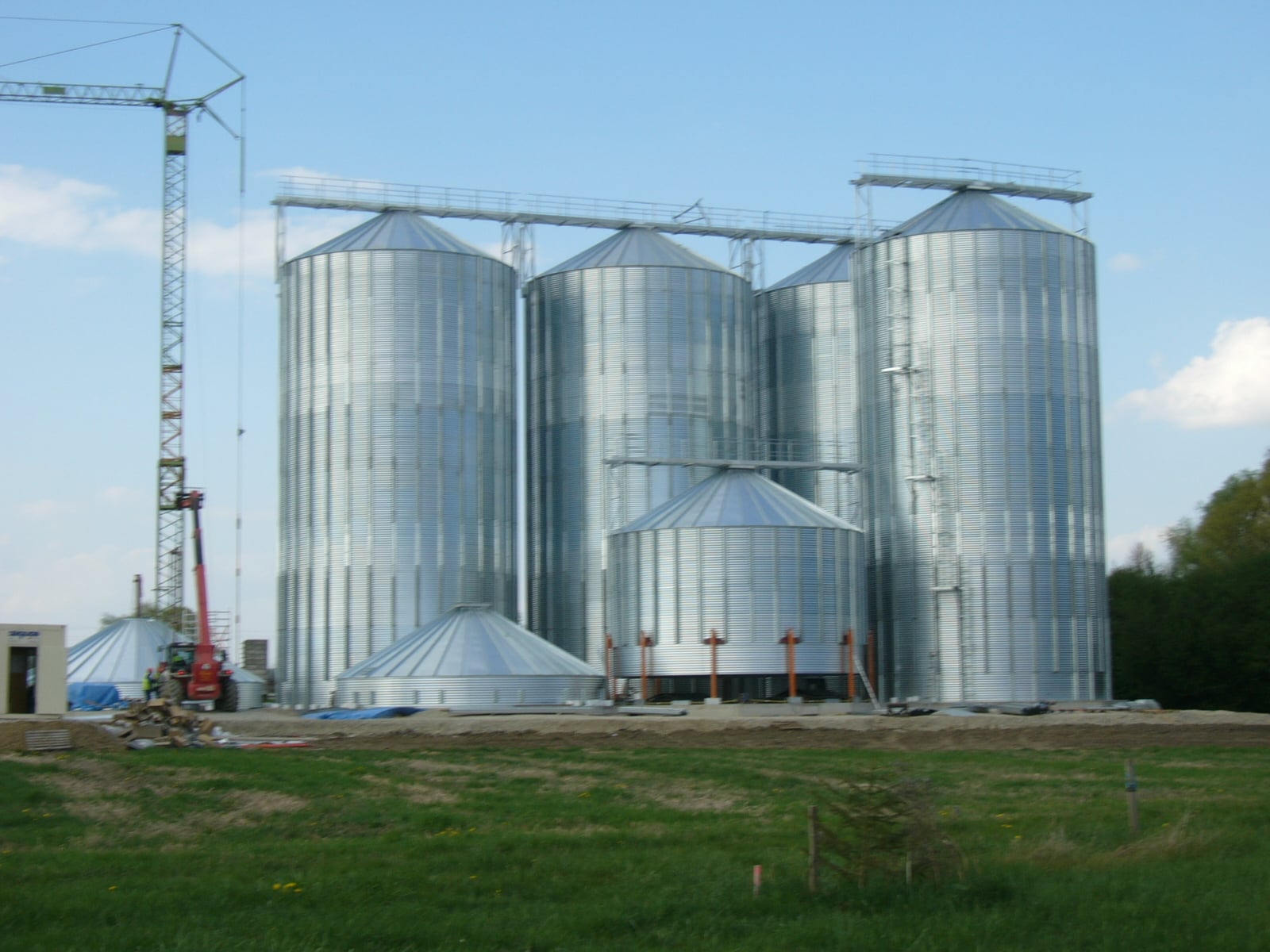
Grain silo types come down to two shapes, and the split maps neatly onto the farm-versus-mill divide. A flat-bottom silo holds the largest volumes and suits long-term storage, which makes it the usual choice for farms banking a harvest. It needs a sweep or floor system to clear the last of the grain, since it does not empty under gravity alone.
A hopper-bottom silo sits on legs and discharges through a cone, so grain flows out under gravity for faster, cleaner emptying. That suits mills, maltings and drying plants moving product regularly, and it works well for temporary wet grain ahead of drying. The choice between flat-bottom or hopper-bottom silos usually follows the pattern of use, storage duration on one side and discharge speed on the other.
What Size Grain Silo Does Your Throughput Demand?
Size follows need, not ambition. The right capacity comes from your harvest volume or daily throughput, the space on site, and how much headroom you want for a strong year. Diameter and height then follow from the volume you settle on.
A smaller farm may need a single modest silo, while a large arable operation or a mill can call for high-volume flat-bottom units, or a bank of silos storing different grades separately. Rather than starting from a maximum figure, work back from what you actually move in a season. Our grain silo sizes cover that range, from compact units to large flat-bottom stores.
What Build Quality Should a Grain Silo Manufacturer Offer?
Grain is a valuable, perishable asset, so the store protecting it has to last and keep the contents in good condition. Two markers tell you a silo is built properly. The first is the steel. G600 galvanised steel carries a heavier zinc coating that resists corrosion through years of loading, emptying and weather. The second is compliance with BS EN 1090, the standard for the execution of steel structures. Our Brice-Baker silos are built from G600 galvanised steel and manufactured to BS EN 1090, for storage that holds its condition over decades.
The stakes behind that are real. Defra put the 2024 UK wheat harvest at 11.1 million tonnes, all of it needing safe, dry storage somewhere in the chain. Build quality is what keeps a share of that grain in good condition, season after season.
What Support Should You Expect After Installation?
A silo is a long relationship, not a one-off purchase, so aftercare belongs in the buying decision. A manufacturer that inspects, repairs and refurbishes its own silos can keep a unit working for decades, rather than leaving you to source help elsewhere later. Ask what inspection and maintenance look like, and whether the handling equipment, the conveyors, augers and dryers, is supported too.
Refurbishment is often the smarter route when an older silo starts to show wear, restoring it for far less than a full replacement. Our silo refurbishment service extends the life of existing grain stores, which is worth factoring in when you compare suppliers.
Choosing a Grain Silo That Fits Your Operation
The right grain silo is the one matched to how you work, the type that suits your discharge pattern, the size that fits your throughput, and the build quality that protects your grain for the long term. Get that right, and the silo repays the investment for decades.
Franklin Hodge manufactures Brice-Baker silos built around the way farms and mills actually operate, for grain storage and handling across the UK and internationally. Tell us how your operation runs and what you need to store, and request a quote so we can match the right silo to it.